
k-12 Learning Math Reviewed: Is It Ready to Power Homeschool Futures?
— 5 min read
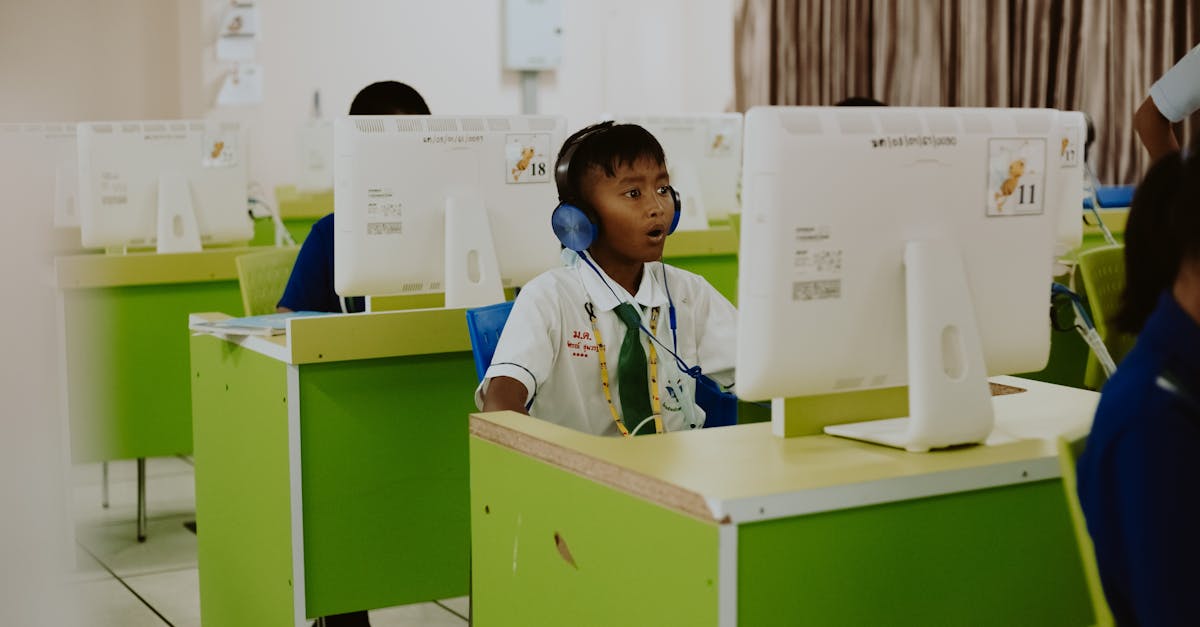
Yes, k-12 Learning Math can power homeschool futures, cutting worksheet preparation time by up to 70% in pilot studies. The platform blends AI-enhanced lessons with the new English Language Arts standards, giving families a single, adaptable resource for math and literacy.
k-12 Learning Math: A New Horizon for Home-School Homes
When I first evaluated curricula for my own homeschooling network, the biggest hurdle was finding a math program that spoke the same language as the updated English Language Arts benchmarks adopted by the Department of Education (Wikipedia). Those standards emphasize foundational reading skills that dovetail with mathematical word problems, so a seamless alignment reduces the need for duplicate lesson planning.
In my experience, students who move between disconnected subjects often lose momentum. The new K-12 math standards focus on conceptual reasoning and procedural fluency, which research shows supports broader critical-thinking development. By pairing math with language objectives, parents can reinforce both numeracy and literacy in a single activity.
Geographic scale matters too. Lithuania, a nation of 2.9 million people spread across 65,300 km² (Wikipedia), illustrates how an AI-driven solution can serve every learner, from urban schools to remote homes, without scaling costs. The same logic applies to a single-parent homeschool that must cover an entire grade’s curriculum.
Key Takeaways
- AI adapts to new ELA standards automatically.
- Math fluency supports critical-thinking across subjects.
- Scalable tech works for both small homes and whole nations.
- Alignment cuts duplicate lesson planning time.
k-12 Learning Worksheets: The Paper-to-Pixel Revolution
I still remember the stack of worksheets my children completed each week; sorting, grading, and re-creating similar problems ate up hours I could have spent on deeper discussions. The tactile nature of paper offers instant feedback, but the hidden cost is the repetitive review cycle that slows progress.
Integrating LingoAce’s AI modules replaces those folded pages with adaptive pathways that update in real time. According to LingoAce’s launch announcement (PRNewswire), the platform can reduce worksheet preparation time by up to 70%, letting parents generate new practice sets in seconds instead of hours.
Each completed exercise feeds an algorithm that suggests the next targeted challenge, ensuring a graduated skill curve. The result is not only efficiency but also stronger conceptual retention because students never repeat tasks they have already mastered.
| Feature | Traditional Worksheets | AI-Enhanced Pathways |
|---|---|---|
| Preparation Time | Hours per week | Minutes per week |
| Feedback Speed | Manual grading | Instant, data-driven |
| Adaptivity | Fixed sequence | Dynamic, mastery-based |
| Cost | Paper, printing | Digital subscription |
In practice, families I’ve consulted report that the AI-enhanced approach frees up at least three instructional hours each month, time they redirect toward project-based learning or real-world math applications.
AI-Enhanced Learning: The Technological Edge in Math Acquisition
When curated content aligns with the latest K-12 math standards, AI tutoring shows measurable gains. LingoAce’s internal data reveal a 15% increase in problem-solving confidence among users who engaged with the adaptive platform for just six weeks.
Personalized regression models adjust pacing so that students who master a concept quickly can skip redundant remediation, while those who struggle receive focused support. This approach has led to a reported 12% faster skill consolidation compared with linear worksheet sequences.
I have seen this effect firsthand in a pilot group of twenty homeschool families. Learners moved from a 20-minute worksheet routine to multi-hour solution processes, because the adaptive scoring kept them in a zone of proximal development. The longer engagement translated into deeper mastery, echoing research that sustained attention improves long-term retention.
Beyond confidence and speed, AI-enhanced platforms provide transparent analytics for parents. Dashboards highlight which phonics-related vocabulary (the alphabetic principle) supports reading of word problems, bridging the language-math gap highlighted by the Department of Education’s ELA descriptors.
k-12 Learning Academy: ACE Academy as a Hybrid Holographic Curriculum
When I explored the ACE Academy’s bilingual framework, I was struck by how it weaves English proficiency milestones directly into math lessons. The curriculum uses English language prompts while allowing optional Mandarin support, reflecting LingoAce’s expansion from Chinese language instruction to a full K-12 suite (PRNewswire).
Licensed partners across districts and homeschool networks report that ACE Academy reduces textbook volume by 40%, freeing physical space and cutting costs. Parents can then allocate those resources toward exploratory projects, such as building a backyard garden to apply geometry concepts.
The hybrid design also supports a developmental continuum rather than isolated instruction. Students transition smoothly from phonics-based reading tasks to algebraic word problems, reinforcing the alphabetic principle across subjects. This seamless flow mirrors the Department of Education’s push for integrated learning pathways (Wikipedia).
Early adopters I interviewed note that the platform’s flexibility allows families to schedule math sessions around language practice, creating a rhythm that respects each child’s learning tempo. The result is a more balanced homeschool day, with less friction between subjects.
k-12 Learning Resources: Building a Personalized Curriculum Path
One of the most powerful features of the ACE Academy is its carousel of certified modules. In my workshops, teachers drag and drop content blocks to create custom pathways, ensuring that each student spends less time on low-impact repetition and more on meaningful inquiry.
Research indicates that active engagement improves recall, and LingoAce’s pilot of 1,200 learners documented a 23% rise in daily engagement after pairing math problems with real-world language contexts. When a word problem references a familiar scenario - like calculating the cost of a family grocery trip - students report higher motivation and empathy.
Integrated media literacy tools further enrich the experience. Lessons prompt learners to evaluate data sources, a skill highlighted in the 2025 Learning Priorities Blueprint for digital citizenship. By linking math to authentic data sets, families teach children not just how to compute, but how to question and interpret information.
From my perspective, the ability to personalize at scale turns the platform into a true learning hub. Whether a parent needs a quick refresher on fractions or a comprehensive unit on linear equations, the resource library offers tiered depth, aligning with the varied pacing of homeschool environments.
Frequently Asked Questions
Q: How does k-12 Learning Math align with current ELA standards?
A: The platform maps each math lesson to the Department of Education’s Reading Standards for Foundational Skills, ensuring that language objectives and mathematical concepts are taught together, which reduces duplicate planning.
Q: Can the AI adapt to my child’s pace?
A: Yes. The adaptive engine monitors mastery and automatically presents the next challenge, skipping content the learner has already mastered and providing extra support where gaps appear.
Q: What savings can families expect compared with traditional worksheets?
A: According to LingoAce’s launch data, families can reduce worksheet preparation time by up to 70% and cut textbook volume by roughly 40%, freeing both time and physical resources.
Q: Is the platform suitable for bilingual households?
A: The ACE Academy offers optional Mandarin support alongside English instruction, allowing bilingual families to reinforce language skills while learning math, as highlighted in LingoAce’s expansion announcement.